↗
03 / 12 · Cover Story
The city breathes easier
How researchers at Fernsee University are making cities ready for the heat.
The story
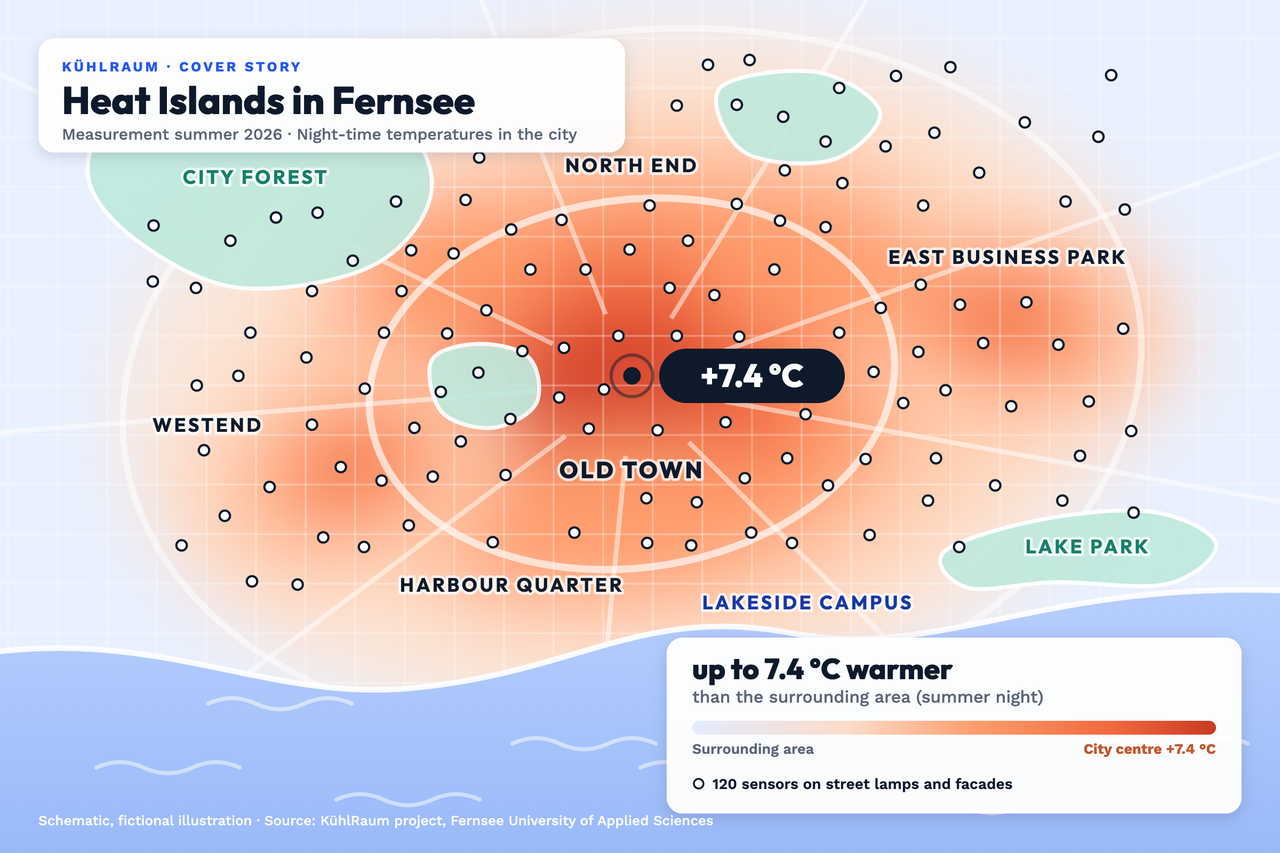
On summer nights, the city gives back the heat of the day only slowly. Researchers at Fernsee University have measured exactly how much.
The research project KühlRaum (Cool Space) runs from 2024 to 2027. It is led by Prof. Dr. Malik Osei, an urban climate researcher in the Faculty of Engineering & Computer Science. 12 researchers and 6 students are working on it, funded with €1.8 million.
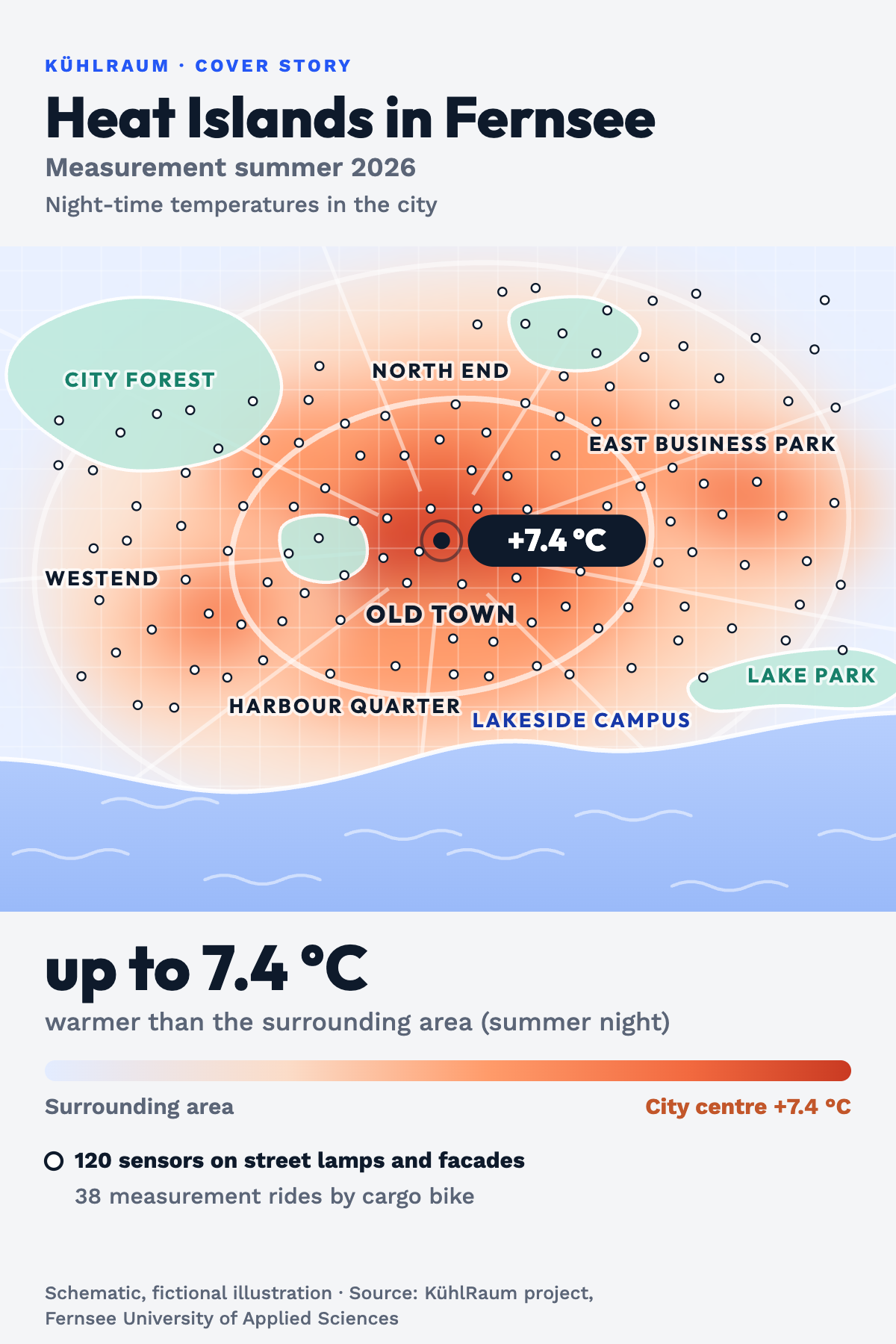
Measurements are taken where the heat builds up: 120 sensors hang on street lamps and facades. In summer 2026, 38 measurement rides by cargo bike were added – often at night, when the difference from the surrounding area is greatest.
The results are clear. And they are not just theory: the city of Fernsee is already putting the first measures into practice.
The results
Four figures that move the city
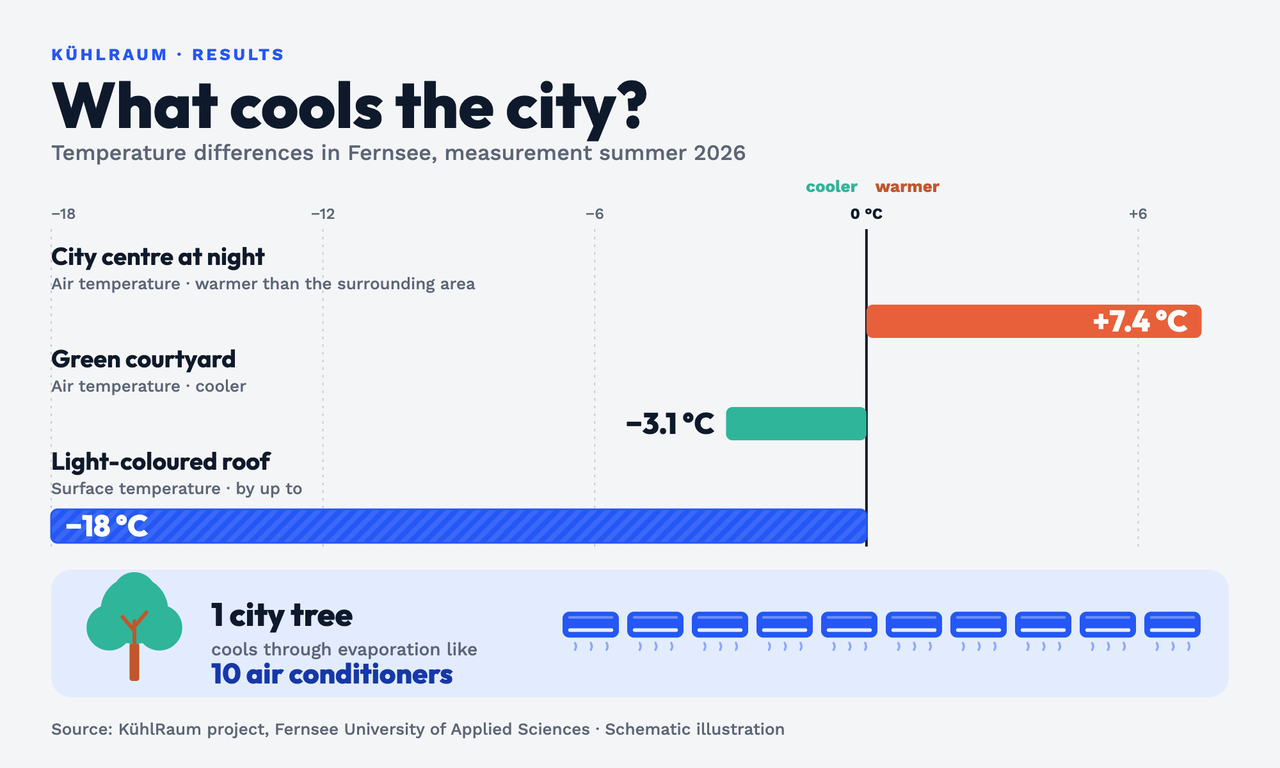
Up to this much hotter is the city centre than its surroundings – on summer nights
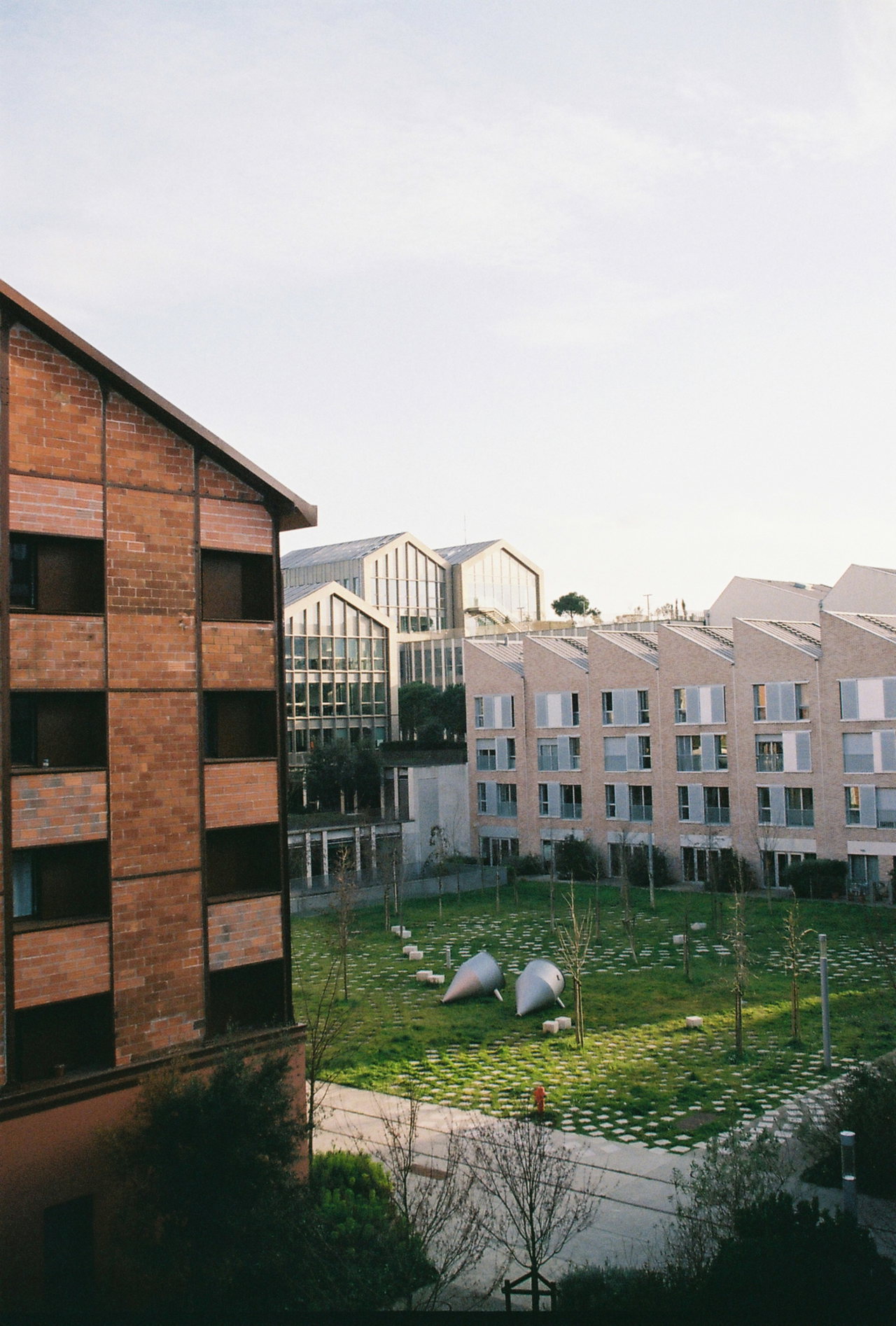
cooler are green courtyards
is how much light-coloured roofs lower the surface temperature – by up to
air conditioners: the cooling a single city tree provides through evaporation
Heat map
Where Fernsee heats up
The sensor data and measurement rides feed into the city’s heat map. It shows which districts heat up most on summer nights and where it stays cool.
Stylised illustration. Click to enlarge.
The KühlRaum project in numbers
One team, 120 sensors, one summer on a bike
Partners are the city of Fernsee, Stadtwerke Fernsee, the housing association SeeWohnen and the landscape practice Grünkante.
Funding
Partners from the city and business
Researchers
Students
Sensors on street lamps and facades
Measurement rides by cargo bike
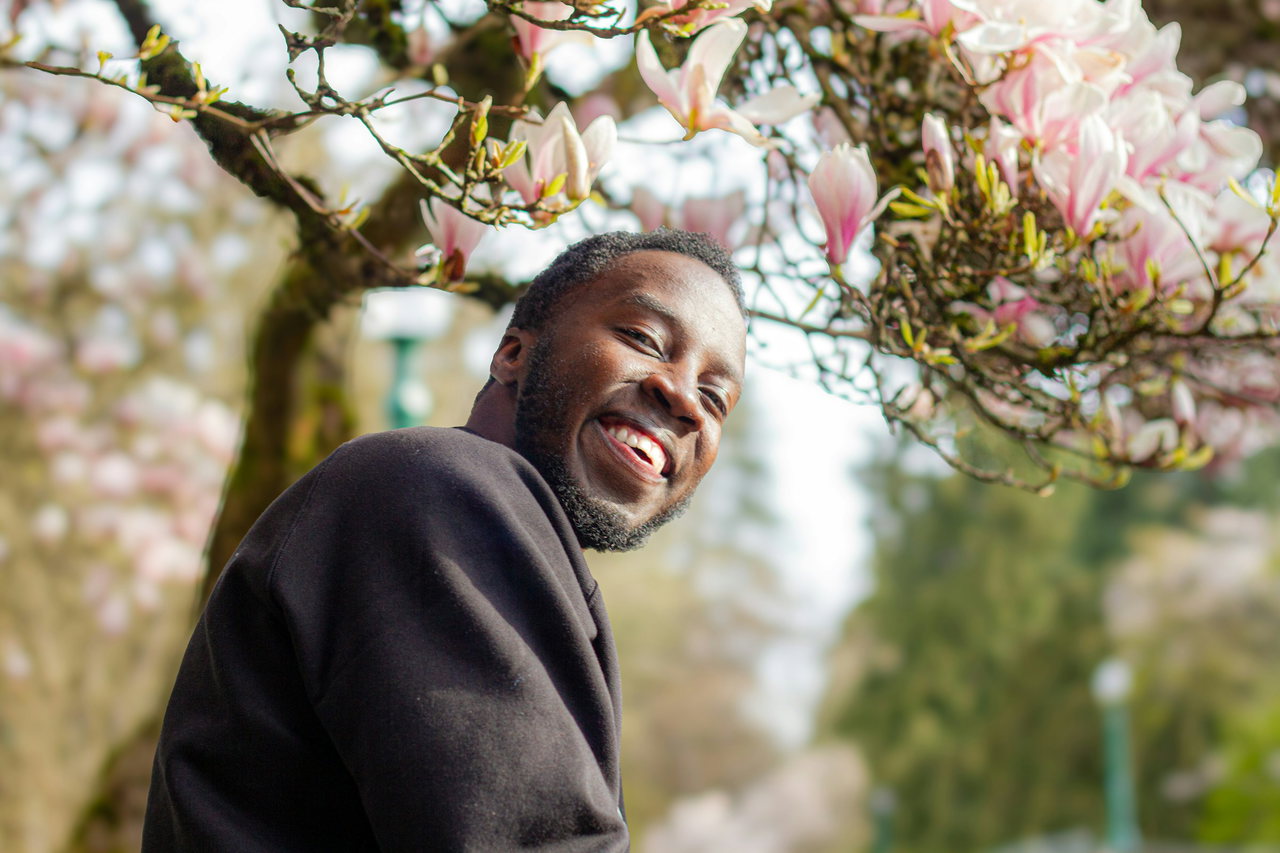
Heat is quiet. It makes no noise, but it makes people ill.
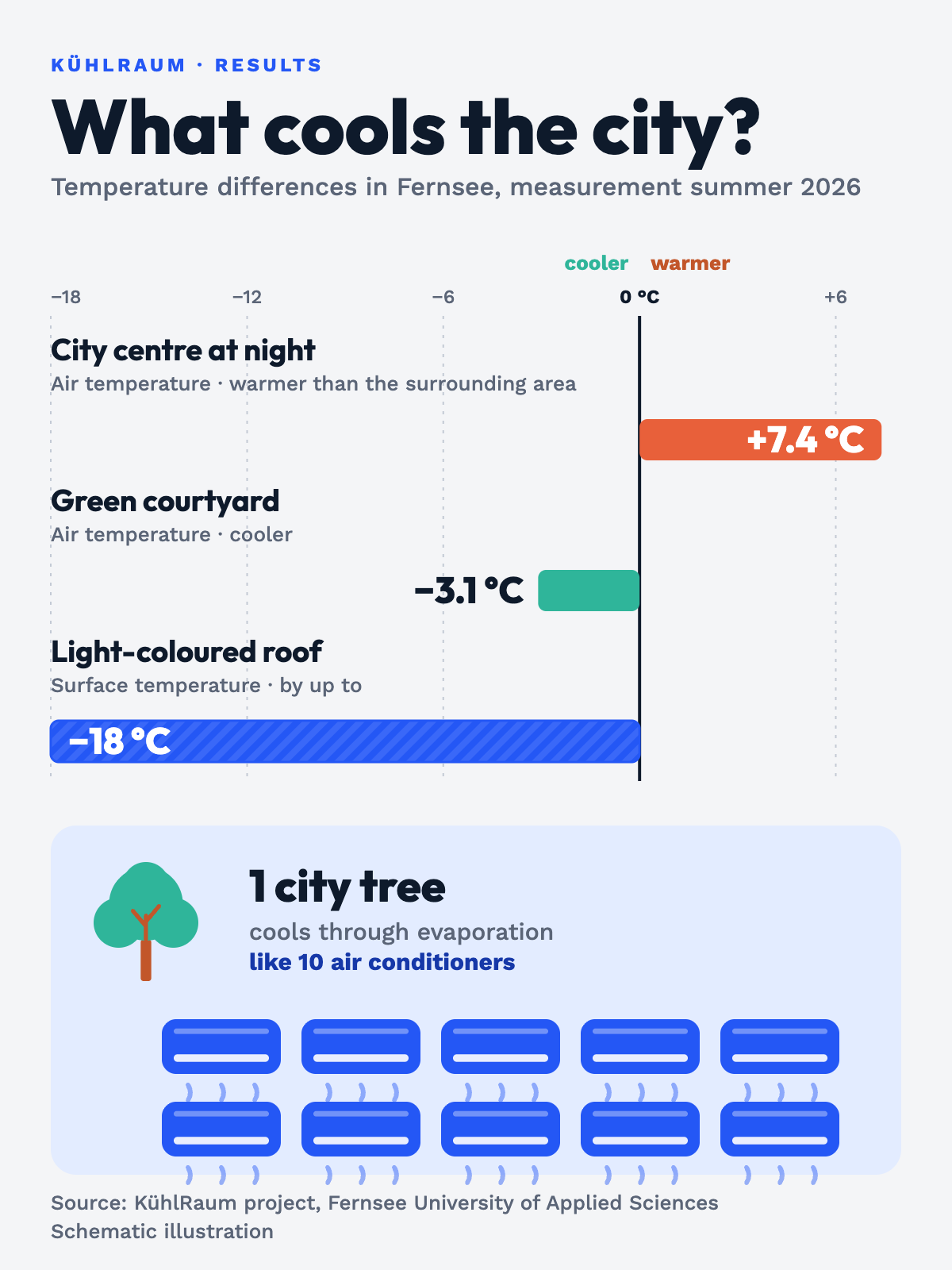
What cools the city?
Greenery, roofs, water
Green courtyards are 3.1 °C cooler, and light-coloured roofs lower the surface temperature by up to 18 °C. A single city tree cools as strongly as ten air conditioners through evaporation.
Click to enlarge.
What happens now
Three measures the city is now putting into practice
01
New trees
400 new trees by 2028 will provide shade and cool the air through evaporation.
02
Heat island map
The map is available online and gives city planners a solid basis for decisions.
03
Cool places
15 public spaces with water and shade invite people to cool down.
Project timeline
From the first sensors to the guide
2024
Installing the sensors
The first sensors go into operation on street lamps and building façades.
Summer 2025
First measuring season
The sensors deliver the first data from across the city.
2026
Heat map and model
The measurements are turned into the heat map and a model of the city. 38 cargo-bike measuring rides add to the data.
2027
Guide for cities
At the end of the project, a guide sets out what other cities can adopt.
Cycling through the city at three in the morning on a cargo bike – I had never seen Fernsee like that before.

Fernsee University, the city of Fernsee, and all people, projects, companies and figures are fictional – this university magazine is a Novamag template.